
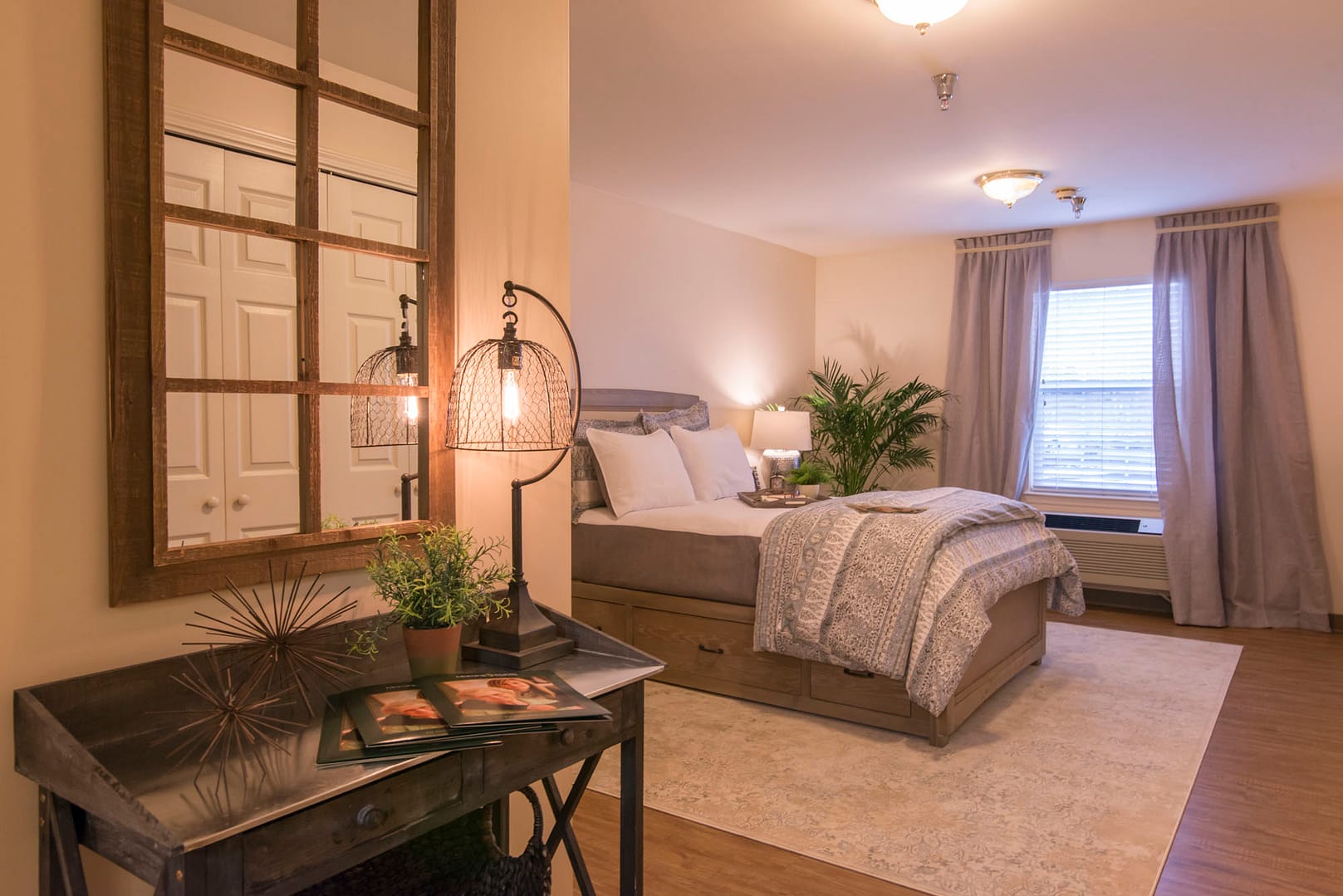
When families first start talking about senior living, one of the biggest concerns is the apartment.
Will it feel too small?
Will it feel like giving something up?
That’s a very real and honest reaction.
But what many residents and families discover, sometimes sooner than they expect, is this:
You’re not giving up space.
You’re giving up the work that came with it.

What You’re Really Letting Go Of
It’s not the meaningful parts of home. It’s the parts that quietly became a burden.
- Keeping up with cleaning and maintenance
- Managing repairs or unexpected issues
- Sorting through years of storage
- Heating and cooling rooms you rarely use
- Moving from room to room just to complete daily tasks
Those things take time and energy. And over time, they can take more than they give.
What You Gain Instead
Morning Pointe Senior Living apartments are designed to give you what you actually use and enjoy every day.
- Comfortable, easy-to-navigate layouts
- Just the right amount of space, without excess
- Storage that makes sense for your lifestyle
- Multiple floor plan options to fit different needs and preferences
And most importantly, a place that feels like yours.
Families often play a big role in this transition, helping bring in favorite furniture, photos, and those personal touches that make it feel like home from day one.
It doesn’t take long before many residents say the same thing:
“I don’t miss the extra space. I don’t know why I held onto it for so long.”
A Simpler Way to Live
In a senior living apartment, everything is within reach.
You’re not walking past rooms you don’t use.
You’re not spending time managing a house.
You have what you need, when you need it.
And that simplicity opens up something really valuable:
More time.
Time to connect.
Time to enjoy activities.
Time to rest.
Time to focus on what actually matters to you.
Tips When Looking at Apartment Options
If you’re starting to explore senior living, here are a few helpful things to consider:
- Think about daily living, not square footageWhat spaces do you actually use each day?
- Look for ease and accessibilityCan you move comfortably throughout the apartment?
- Consider storage, but keep it realisticWhat do you truly want to bring with you?
- Ask about different floor plansHaving options can make all the difference in finding the right fit
How to Start the Conversation with a Parent
This topic can feel sensitive, so how you approach it matters.
- Start with curiosity, not pressure“What feels like the hardest part of keeping up the house right now?”
- Focus on lifestyle, not loss“What would you enjoy more if you didn’t have to worry about maintenance?”
- Share what you’ve learned, not what they “should” do“I’ve been looking at some places, and the apartments are actually really comfortable and manageable.”
- Keep it open-endedThis is a conversation, not a one-time decision
Where to Start If You’re Feeling Overwhelmed
Downsizing can feel like a lot. That’s normal.
You don’t have to figure it all out at once.
A simple first step:
Start by looking at apartment floor plans.
- What feels comfortable?
- What feels manageable?
- What feels like it could work?
From there, the conversation becomes more real and less overwhelming.
A Different Way to Think About It
This isn’t about giving something up.
It’s about gaining something many people don’t realize they’ve been missing:
Time, ease, and peace of mind.
And for many residents, it truly does feel like a gift
wrapped up in a new place to call home.