
And the one rule that can protect you almost every time
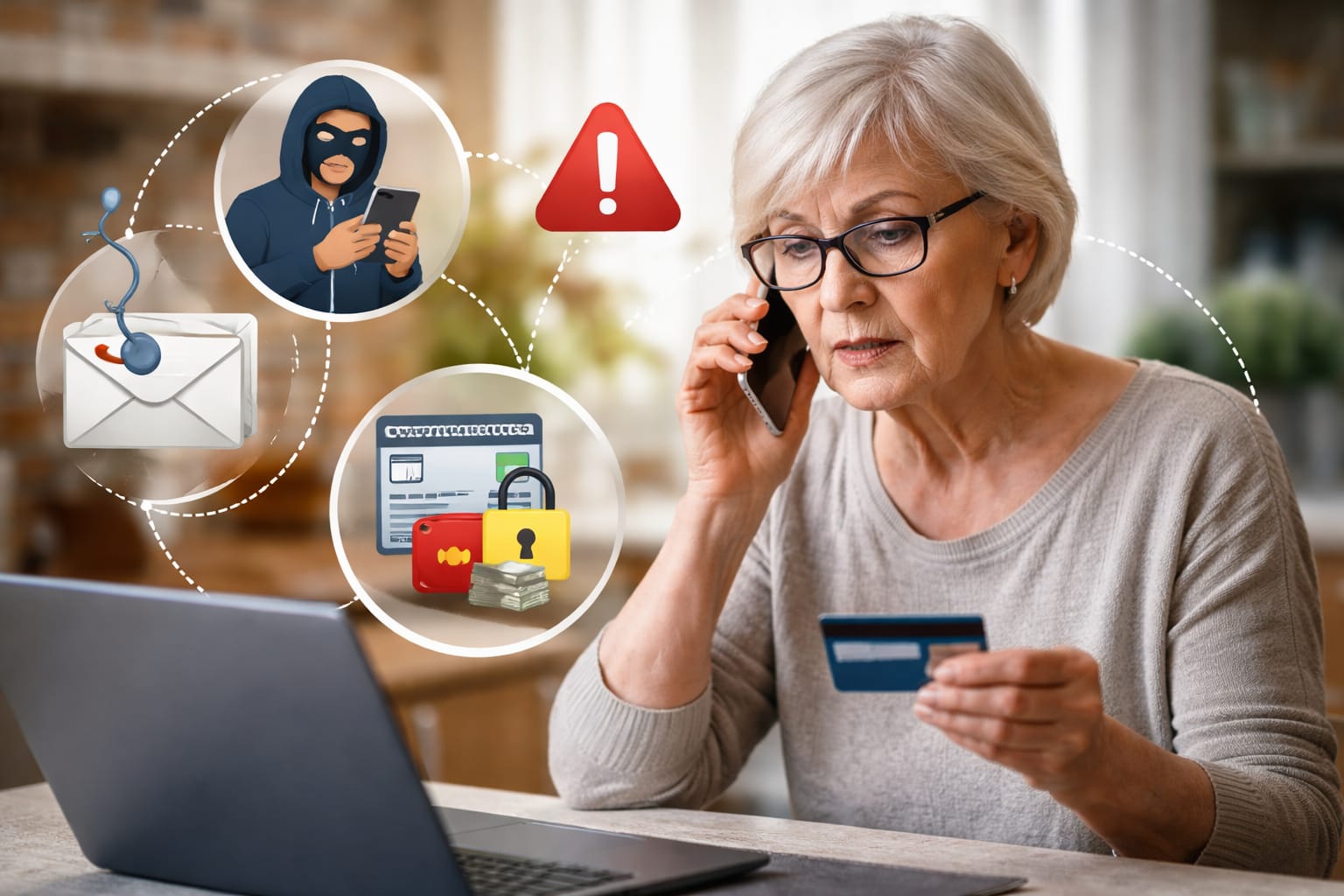
Scams targeting older adults have grown rapidly in recent years. Criminals know that many seniors are trusting, financially responsible, and often answer the phone when someone calls.
The sad truth is that these scams are becoming more convincing. Scammers may sound professional, use real company names, or even pretend to be a family member.
The good news is that most scams follow the same pattern. Once you know what to look for, they become much easier to spot.
The most important rule to remember:
If someone contacts you unexpectedly and asks for personal information, passwords, or payment, it is almost always a scam.
No legitimate company, government agency, or bank will pressure you this way.

The Most Common Scams Targeting Seniors
Phone Call Scams
One of the most frequent scams still begins with a phone call.
A caller may claim to be from the IRS, Social Security, Medicare, a bank, or a utility company. They may say something is wrong with your account or that you owe money.
They may also threaten consequences if you do not act immediately.
Common warning signs:
- They ask for your Social Security number, bank information, or passwords
- They demand payment immediately
- They request unusual payment methods like gift cards or wire transfers
- They tell you not to tell anyone about the call
Real organizations do not ask for personal information this way.
If you receive a call like this, hang up and contact the organization directly using the phone number on their official website.
Grandparent or Family Emergency Scams
This scam can be especially emotional.
A caller may pretend to be a grandchild or relative in trouble. They may say they were in an accident, arrested, or stranded while traveling.
Often they will say:
“Please don’t tell Mom or Dad. I just need money right now.”
Warning signs:
- Urgent request for money
- Asking you to send funds quickly
- Requesting gift cards, wire transfers, or payment apps
Before doing anything, pause and call another family member to confirm the story.
Medicare or Health Insurance Scams
Scammers often target seniors during enrollment seasons.
They may claim to be updating your Medicare information or offering new benefits.
Warning signs:
- Asking for your Medicare number
- Saying you must “verify” your information immediately
- Offering free medical equipment if you provide details
Protect yourself:
- Never give your Medicare number to someone who contacts you unexpectedly
- Work only with trusted providers
Online and Email Scams
Technology scams are growing fast.
You might receive emails or messages that appear to come from companies you know. Some may say your account was locked or that you must reset a password.
Warning signs:
- Links asking you to “verify your account”
- Poor spelling or unusual email addresses
- Messages creating panic or urgency
When in doubt, do not click the link. Go directly to the company’s website instead.
The Number One Sign a Message Is Fake
There is one common thread in nearly every scam.
Someone contacts you and asks for personal information or payment.
That includes:
- Social Security numbers
- Bank account information
- Credit card numbers
- Passwords
- Gift card payments
- Wire transfers
If someone asks for any of these unexpectedly, stop and pause.
It is almost always a scam.
Simple Ways to Protect Yourself
A few small habits can prevent most scams.
Pause before acting
Scammers rely on urgency. Take time to think.
Never give personal information to someone who calls you
Hang up and contact the organization yourself.
Talk to someone you trust
If something feels strange, call a family member or friend.
Do not send money or gift cards to strangers
Legitimate organizations do not request payment this way.
Trust your instincts
If something feels off, it probably is.
A Final Thought
It can be frustrating and upsetting to hear about how often scammers target older adults. These criminals often prey on kindness and trust.
The most important thing to remember is this:
You are never obligated to respond, provide information, or send money to someone who contacts you unexpectedly.
Hanging up the phone or ignoring a message is not rude. It is one of the best ways to stay safe.
And if you are unsure, reach out to someone you trust. A quick conversation can often stop a scam before it begins.