
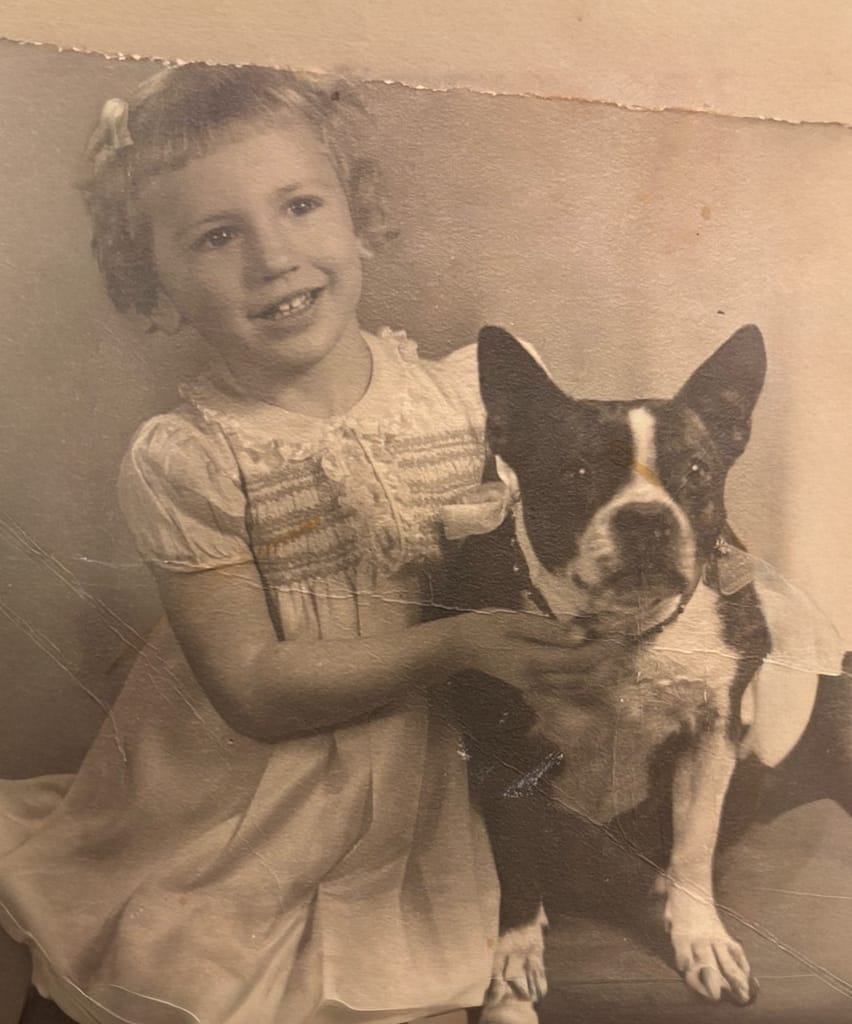
On May 5, 1937, in Plainfield, New Jersey, a little girl posed proudly beside her Boston Terrier, Bootsy. In the photo, three-year-old June Carter’s eyes twinkle with delight. At first glance it’s simply a child with her dog, but for those who would come to know her story, that picture marks the beginning of a lifelong devotion to animals — a devotion that would one day reshape a community.
A Question That Changed Everything
When June and her husband, John “Mike” Carter, moved their family to Galena, Ohio, in 1972, Delaware County had no Humane Society. What June discovered instead broke her heart: countless animals abandoned, abused, or neglected with nowhere to go.
She gathered with a few like-minded women around a table and posed a question that would change lives for decades to come: “What can we do?” From that question, the Humane Society of Delaware County was born.
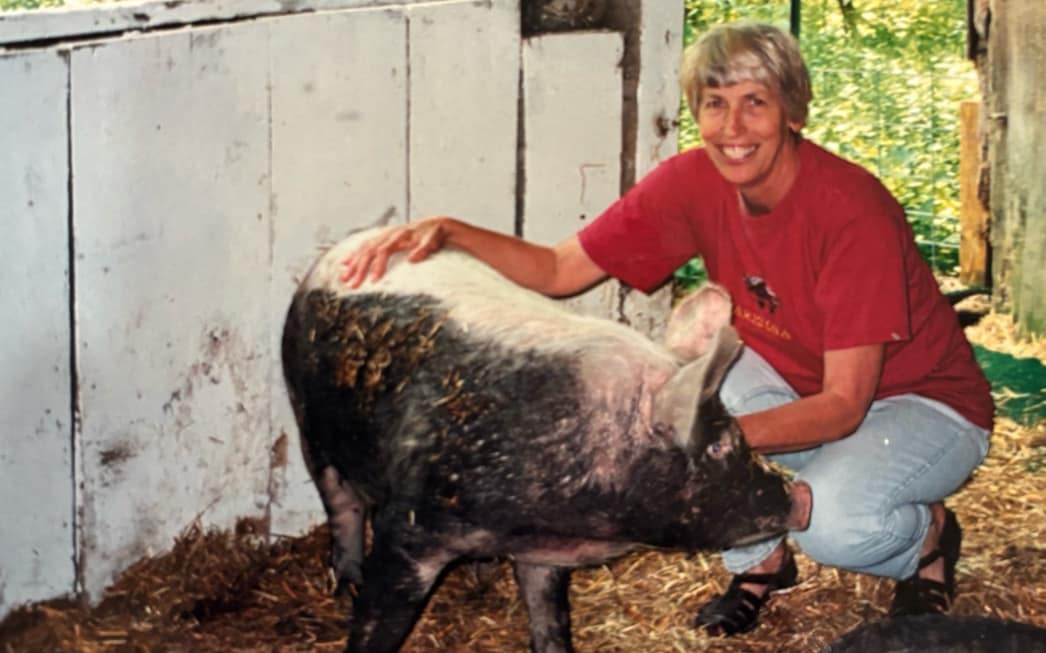
In the years before a shelter existed, her family farm became one. At any given time, June might be caring for 40 dogs, 20 cats, pigs, chickens, or even the occasional exotic animal. A barn once filled with hay rang instead with the cries of rescued cats. Every paycheck from her teaching job went to food, medicine, and veterinary care. Her children grew up immersed in that mission, learning from her example even when the chaos sometimes felt overwhelming.
The Rescues That Defined Her
The stories of the animals she saved reveal both the heartbreak and the joy of her work. One of her first rescues in Ohio was Daisy, a starving bulldog June pulled from under a car in a blizzard. Daisy became family — so beloved that the Carters made up songs about her to sing at the piano.
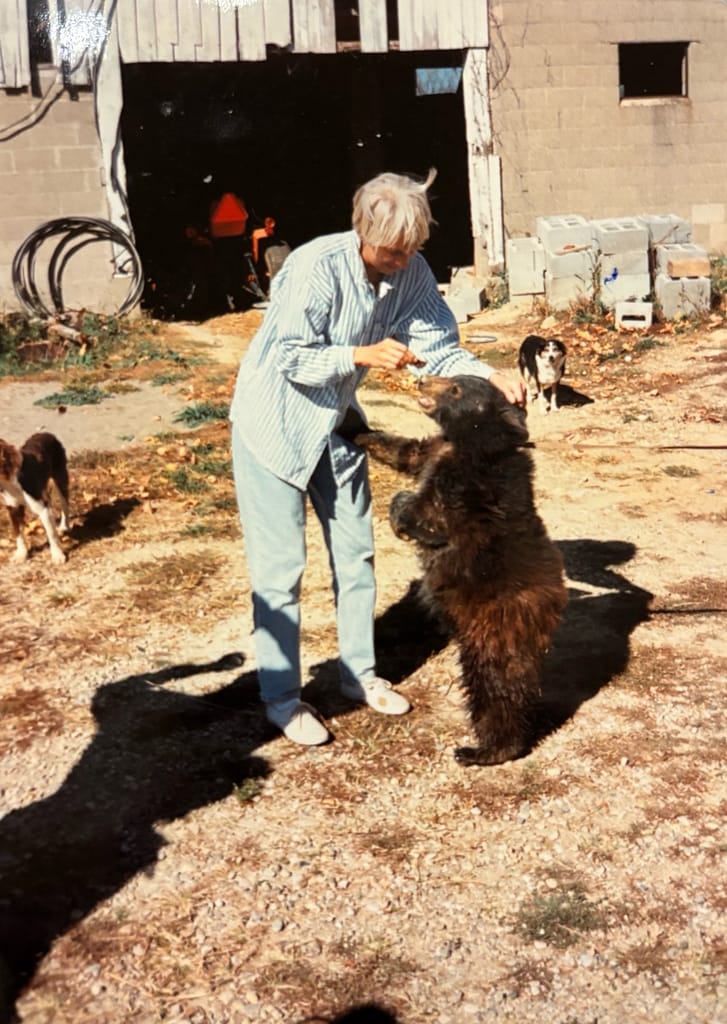
And then there was Boo the Bear. Purchased as a cub, Boo had been chained and starved, his collar embedded into his neck. Though it wasn’t technically her jurisdiction, June couldn’t turn away. She bought him outright, drove him herself to a vet, and paid for surgery. When no local sanctuary would take him, she secured him a home with the Performing Animal Welfare Society in California. In 1995, U.S. Air flew Boo across the country for free.
Twenty-five years later, at a Humane Society gala in her honor, June watched a video of Boo thriving alongside another bear named Winston. The room wept; June brushed it off with a smile: “Anybody would do this.”
A Teacher and an Advocate
June’s gifts extended beyond animals. As a teacher, she was ahead of her time, bringing dogs into classrooms long before therapy animals were widely accepted. She discovered that children struggling to read gained confidence when reading aloud to a dog who listened without judgment.
She later became a humane educator, telling children over and over: “If you see something, say something.” Thousands of students carried that lesson with them, passing her compassion forward.
Her ability to connect with people mattered too. She helped secure donations large enough to purchase land and build the Humane Society’s core shelter — the very building still used today.
Recognition and Humility
June never sought the spotlight. “I’m just a nutcase for animals,” she would laugh, even as sheriffs called her in the middle of the night, even as she waded onto frozen reservoirs to rescue stranded dogs, even as she pulled a pig named Tinkerbell out of a dark basement.
Her work, however, did not go unnoticed. In 2003 she was nominated Woman of the Year by the American Red Cross in Delaware County. In 2020, the Humane Society established the June Carter Ambassador Award in her name — an honor she accepted with her trademark humility.
A Legacy of Love
June’s story is not measured only in awards or even in numbers, though those are staggering: hundreds, maybe thousands of animals saved; a Humane Society that now adopts out over 1,000 animals each year with a 94.97% live release rate.
Her true legacy lies in her unwavering heart. She never said no. She renamed an “ugly” dog Clarice to restore her dignity. She and Mike fed feral cats every single day for more than 15 years. And though Mike was not naturally an animal lover, he supported her tirelessly because he loved her.
Her daughter Katie often jokes that when June crosses the Rainbow Bridge, it may be a while before she reaches the face of Jesus — because thousands of animals will be lined up to greet her first.
It is a fitting image for a woman who spent her 88 years giving her voice, her home, her paychecks, and her heart to those who had none.